History of Banking Museum
Museum of Banking History Support
The project is the rehabilitation of the historic Germantown Bank building in order to create a “Museum of Banking” inside. The building, owned by the Germantown Historical Society (a 501c3 non-profit), is in the “Transportation Heritage Area” of Montgomery County, and is conveniently located within the County’s MARC Rail Communities Sector Plan and included in that vision for the future.
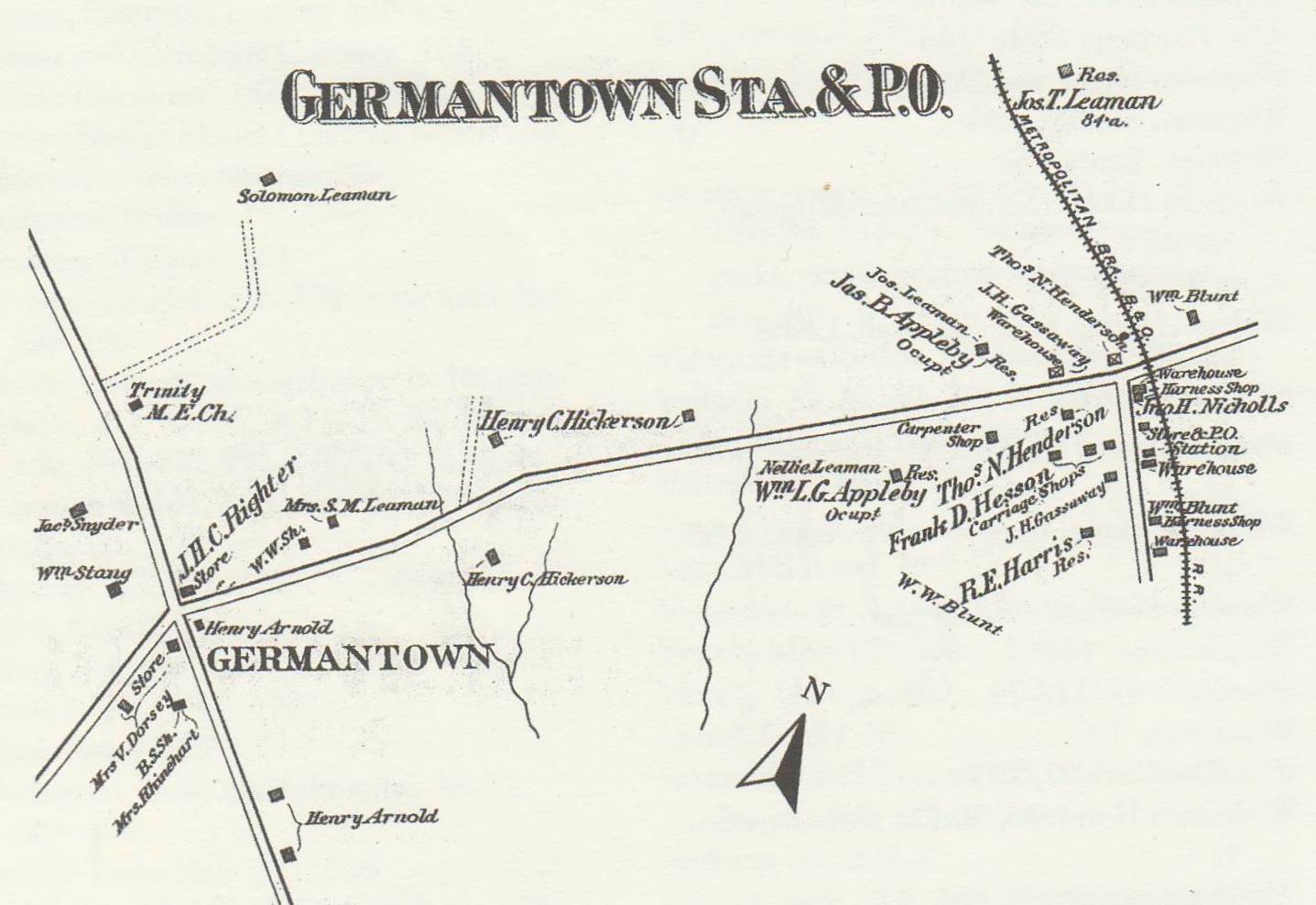
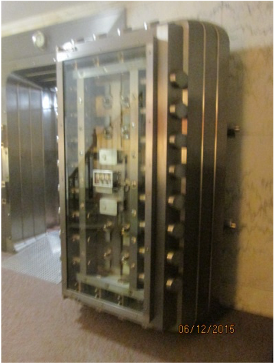
A bank was an essential element of an agricultural railroad town along with the railroad station, the general store, and the mill, which turned the wheat and corn grown by the farmers into saleable flour and meal. The bank provided a place where the mill workers, farm workers, and clerks could cash their paychecks; where the farmer could get loans to help pay for new machinery; where everyone could save for the future. But this bank was different from today’s banks because it was independent, small, and run by and served the local community. It was also distinguished from other small banks of its time by: 1. Serving both Blacks and Whites, 2. Being the financial arm of the local mill, 3. Having diversified investments including in other countries, 4. Having a state-of-the-art walk-in steel box vault with a three-day alarm system.
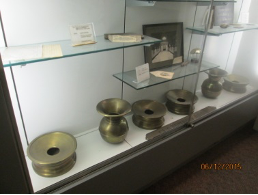
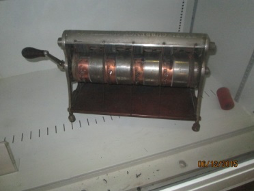
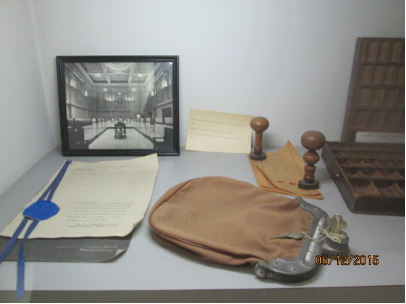
The building is both archetypal – in that it represents typical neo-classical architecture of a small early 20th century bank – and unique, in that it is the only one of its kind left in Maryland. But to just preserve the building as an artifact of the past would not attract many heritage tourists and certainly would not entice them to return. All remnants of a bank have been removed from the interior of the building. All that is left is the walk-in steel box vault – which is its biggest attraction. This is what sparked the idea of creating a Museum of Banking History. Our intention is to create a teaching museum that fits into the historical description of an agricultural railroad town, but which will attract individuals and groups of many interests and livelihoods, families of many cultures, and school classes of many ages – and have them return again and again, bringing friends and relatives.
The Germantown Museum of Banking will not be just a visit to the past for nostalgia but a step back into the past to learn what history can teach us that is relevant to our lives today. And it will be the only such museum in the state of Maryland.
This little community bank, the smallest type of bank building with its own walk-in vault, never closed during those lean years – it was just “Too Small To Fail.”
An investment in the Germantown Museum of Banking is an investment in the future. The Germantown Historical Society is a 501 (c) (3) non-profit organization, and any contribution is tax-deductible. In addition, we are an all-volunteer organization, so your contribution will be used entirely for our Building Repair Fund. You can e-mail us at: germantownmdhistory@gmail.com or leave a message at 301-972-2707.
Levels of Giving for the Museum of Banking History
Platinum level (accumulative) will be listed on a plaque in the Museum + lifetime membership + discounts. Gold will be given lifetime membership + discounts)
Platinum $5,000+
Gold $1,000-$4,999
Silver $500-$999
Nickel $100-$499
Copper $1-$99
Germantown Historical Society
Museum of Banking and Local History Strategic Plan
Stage 1 – Stabilizing and exterior repair of the building
- New heating/cooling system — $7,000
- Install — COMPLETE
- Dispose of old system (1/2 complete)
- Installing a dehumidifier in the basement (complete)
- Waterproofing the building and repair damage — $50,000
Stage 2 – Design Museum
- Design Museum — $10,000 for professional consultant
- Decide on themes
- Items to carry out themes
- What own
- What needed
- How items to be displayed and interpreted
- Floor plan
- Display equipment needed
Stage 3 – — Interior Work— $20,000
- Repair interior
- Fix/replace floor
- Replace plaster
- Repaint interior
- Construct Museum displays –$15,000
- Collect display items
- Acquire display equipment
- Research history and items for interpretation
- Create interpretive signs & arrange items, signs
Stage 4 — Exterior finishing — $25,000
- Painting
- Roof
- landscaping
Stage 5 – Open Museum
- Decide on open hours & paid staff & volunteers needed
- Apply for grant for annual management
- Hire personnel needed
- Publicity
- Open
The Germantown Bank
The first bank in Germantown was created in 1922 because the workers at the Liberty Mill had to pay 15 cents to cash a check at the general store or go all the way to the bank in Gaithersburg. In 1921 Augustus Selby, owner of the Liberty Milling Company and Andrew Baker, who owned an insurance company and lived nearby, approached William Waters, owner of property next to the general store, about the prospect of building a bank on that property. He liked the idea and was pleased to donate the land in return for shares in the Bank.
The Germantown Bank was incorporated in 1922 by William Waters, Andrew Baker, Augustus Selby, Norman W. Waters and Henry Clyde Pumphrey to serve the Germantown community and the workers at Liberty Mill. These founders served as the original Board of Directors. The corporation sold stock at $50 a share to raise money. This smallest of community banks was well endowed and survived the depression years, remaining open during 1931 when 15 country banks in the state closed.
The bank building was constructed in 1922. It was built around the large walk-in vault. Three bays of safe deposit boxes were not installed a few years later. A new locking and alarm mechanism was installed in the massive vault door in the 1930s. The architecture of the building is typical of the small town bank building with two columns flanking the double front door, tall windows to let in lots of light, iron bars on the windows and an iron gate guarding the front door. It is constructed of brick covered with white stucco, and sits on a poured concrete foundation.
Mr. John A. Stover was hired as manager of the bank. He lived in the area and knew all of the customers by name. The records of the bank from the 1920s-50s show that this was truly a community bank owned by the people it served, and serving the members of the community with compassion and care. Letters were addressed to “Mr. Stover, Germantown Bank, Germantown, Maryland,” and would be about anything from a request for extension on a loan to a request from a company for collection of a bill. The Bank served as the financial arm of the Liberty Milling Company, receiving its deposits and paying its bills. The Bank’s investments were very diversified and ranged from classic bonds to a mining company in South America.
In 1958 the Germantown Bank, with Augustus Selby still as president, merged with the First National Bank of Gaithersburg. In 1960 it merged with the Suburban Trust Company and Carrie Green, sister of the local Postmaster, became the bank manager. Lewis Wood, known to the locals as Woody, came to manage the bank in 1966. The building survived the burning of the general store, only 20 feet away, in 1972, through the heroic efforts of the Hyattstown Volunteer Fire Company. Changes were made to the Bank to increase security after it was robbed in 1975. Bullet-proof glass was placed over the teller’s stalls, bars installed on the front door, and a night deposit box constructed in the north side wall.
In 1983 Suburban Bank built a new modern facility on the Northwest the corner of Middlebrook Road and Germantown Road. The safe deposit boxes, many with valuables still in them, were transferred to the new bank. That Suburban Bank was taken over by Sovran Bank and they built a new facility across Germantown Road where Bank of America is now.
Although the safe deposit boxes were moved to the new facility they were outdated and replaced by newer models. The old ones were to be destroyed. Jean Phillips, local farmer, went down to the bank with her pick-up truck and was able to salvage one of the three sets. She had them in her Phillips Farm Market building for display. When she retired and closed the market she donated them to the Germantown Historical Society to be placed back where they originated.
As to the old bank building, it was given by Suburban Trust to the County in August 1983 and was used for many years by the ticket agent for the Maryland Area Rail Commuter train until the train station, which had been burned by arson in 1978, was rebuilt.
Ed Daniels of the County Department of Transportation was able to get a federal grant to rehabilitate the bridge over the railroad tracks next to the bank building and included the restoration of the building as part of the grant. The building was repainted inside and out, the floors refinished, the leaky roof replaced and a new handicapped entrance and lavatory installed. The Germantown Historical Society (GHS), an independent non-profit organization, advised the contractor on the historical restoration, negotiated a 5-year renewable lease with the County and moved into the building in the spring of 2003.
GHS held public lectures on local history in the building, gave tours of the building on request, and had several exhibits inside on local history as well as displays of local historical artifacts. An archive of old photographs, newspapers, maps, aerial photographs dating back to the 1930s, local historical documents such as Master Plans, and family genealogies is in the building.
GHS paid for utilities, created landscaping on the exterior, and made repairs to the interior and exterior of the building in exchange for the lease, but in the spring of 2013 the county would not renew the lease because the water run-off from the parking lot that the County had constructed around the building was entering the rear of the building and causing damage. The County was unwilling to correct the problem, and could not tear down the building because it is historic, so put it up for sale. Not finding a purchaser, the County gave the building to the GHS in July 2015.
by Susan Soderberg, revised August 2019